


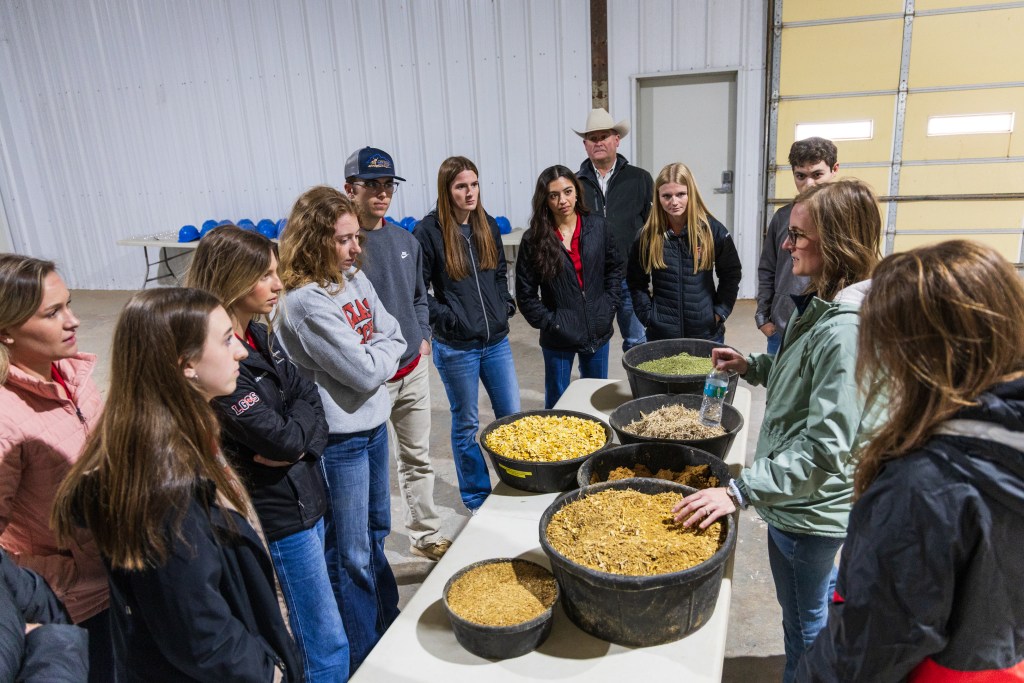
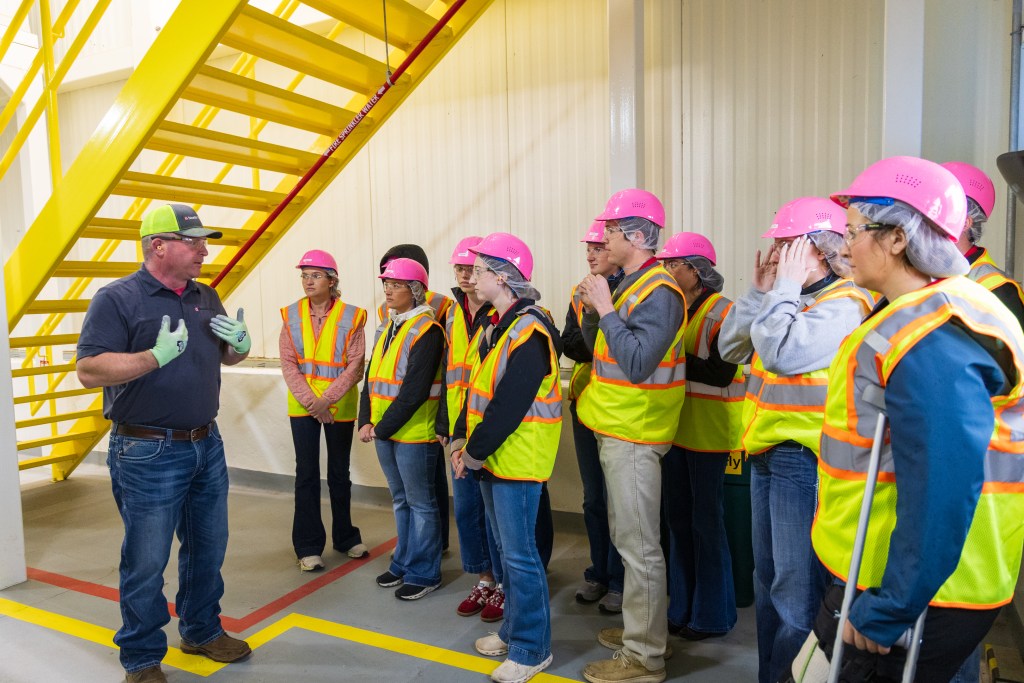
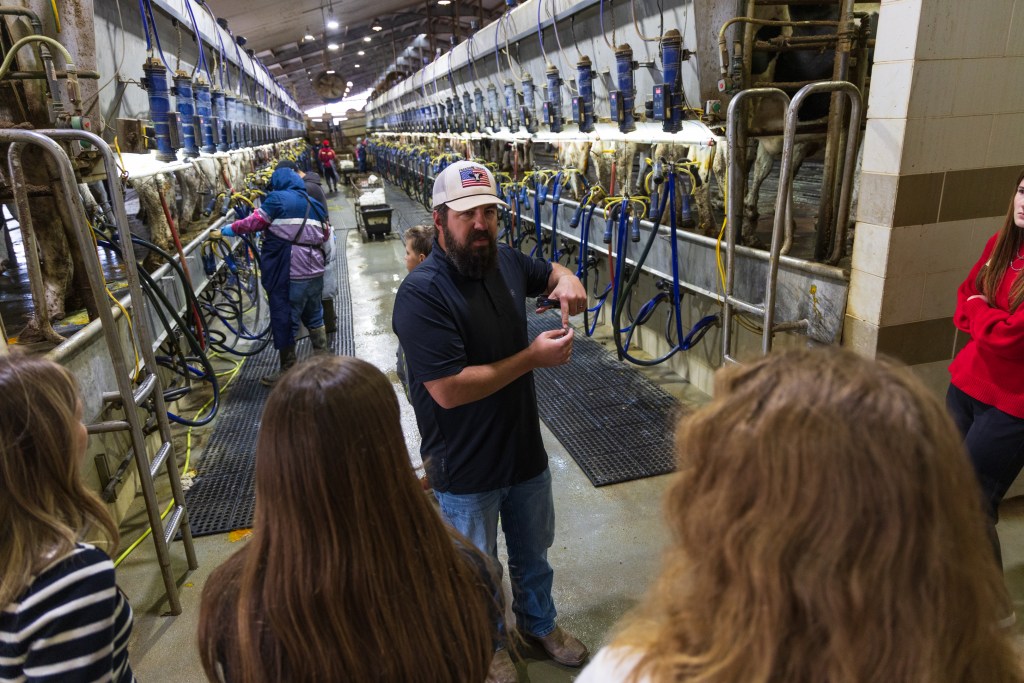
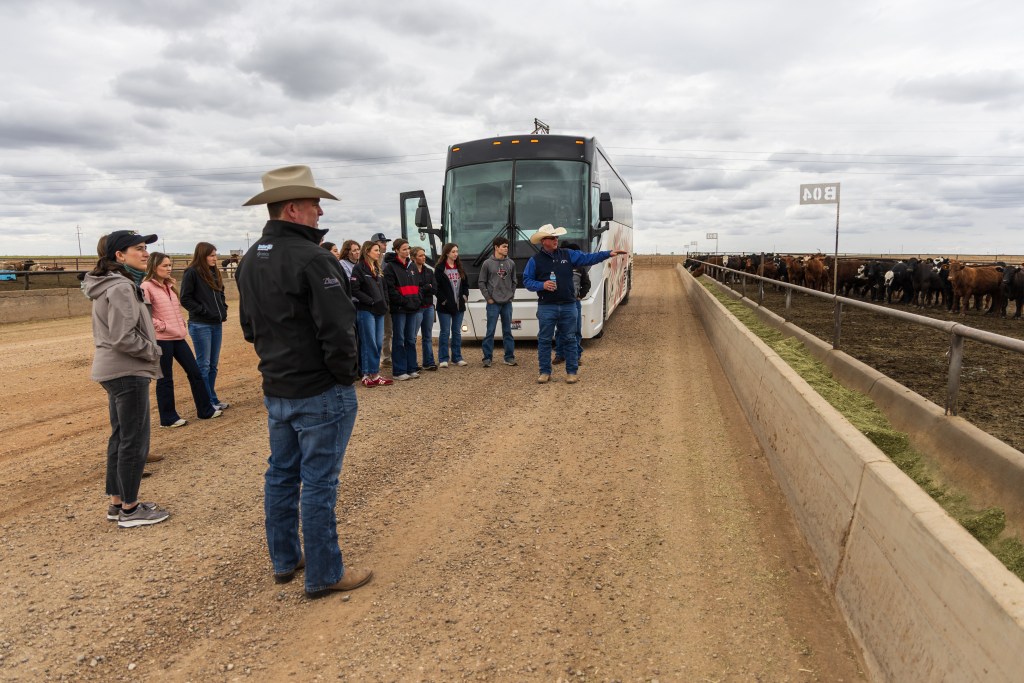
The final regional tour of agriculture offered a relevant and personalized look into multiple operations in the Texas Panhandle. As someone with a background that intersects many topics on the agenda, I was very interested in learning the day-to-day responsibilities. In my hometown of Stephenville, dairy production is prominent in the county. While it has recently decreased due to West Texas expansions, it was wonderful to hear from Brent Bouma about the connection between Legacy Farms and Fairlife products. I also grew up on a beef cattle ranch and competed in meat judging during high school, so I was able to broaden my general knowledge when visiting Wrangler Feedyard and Caviness Beef Packers.
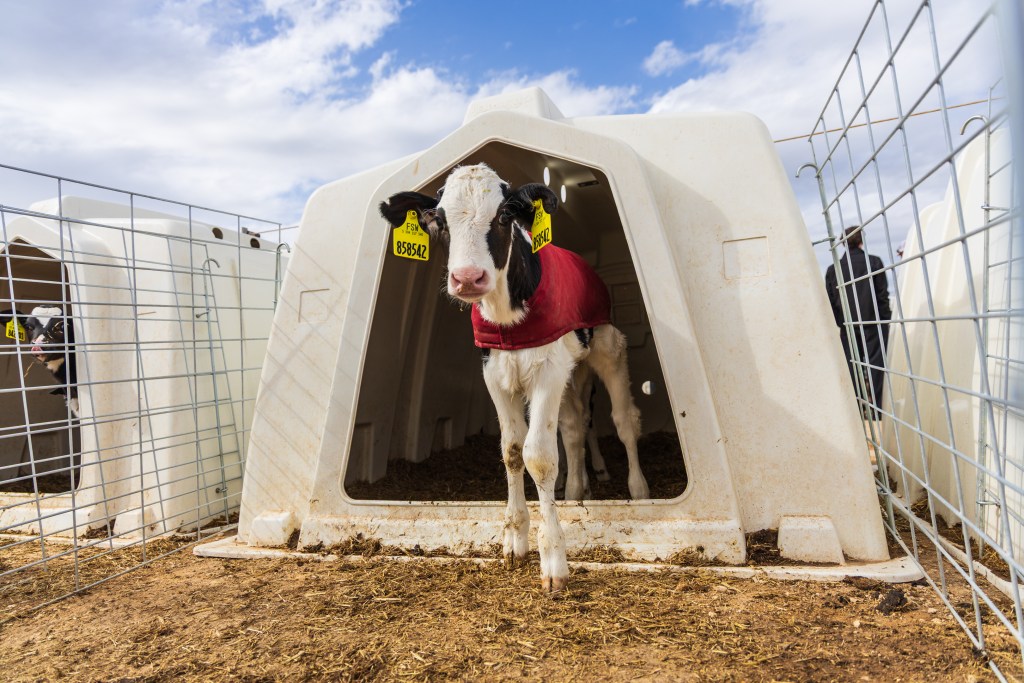
As a senior agricultural communications student, I am currently writing a story for Davis College’s official publication, The Agriculturist. Throughout the semester, I have been covering Texas Tech’s convenient access to the beef supply chain that allows students to gain various hands-on experiences. Of specific interest, I have discussed beef-on-dairy crosses with several sources. During our meetings and tours in the Panhandle, this topic was frequently mentioned by both beef and dairy producers. The primary theme was that crossbred calves are necessary to meet growing beef demands. Although my story sources emphasized this technique’s recent importance to the supply chain, I did not realize its industry importance until this trip.
Another significant theme was the lack of Panhandle water access. After my senior year of high school, my friend explained the reason for the shortage in relation to his West Texas farm. He talked about the movement of dairies into the area and the vast amounts of water needed to support the operations. It was reassuring to hear Bouma correct this misconception and shift my thoughts to another issue: the blame game. It is increasingly important for agriculturists to support each other, regardless of sector. Everyone is focused on growing the food supply, so the industry should begin joining forces, rather than building internal resentment.
In terms of the Panhandle’s distinct impact, many of the operations were multiple times larger than most of our visits in the Rio Grande Valley and South Plains. It was oftentimes difficult to grasp the size of the dairy and feed yard, considering the amount of support needed to maintain large operations. At Wrangler Feedyard, Alyssa Word said there are 50,000 head of cattle with 45 employees, which allocates approximately 1,000 head per person. While this distribution can seem excessive, putting it into proportion made it more feasible than I originally thought.
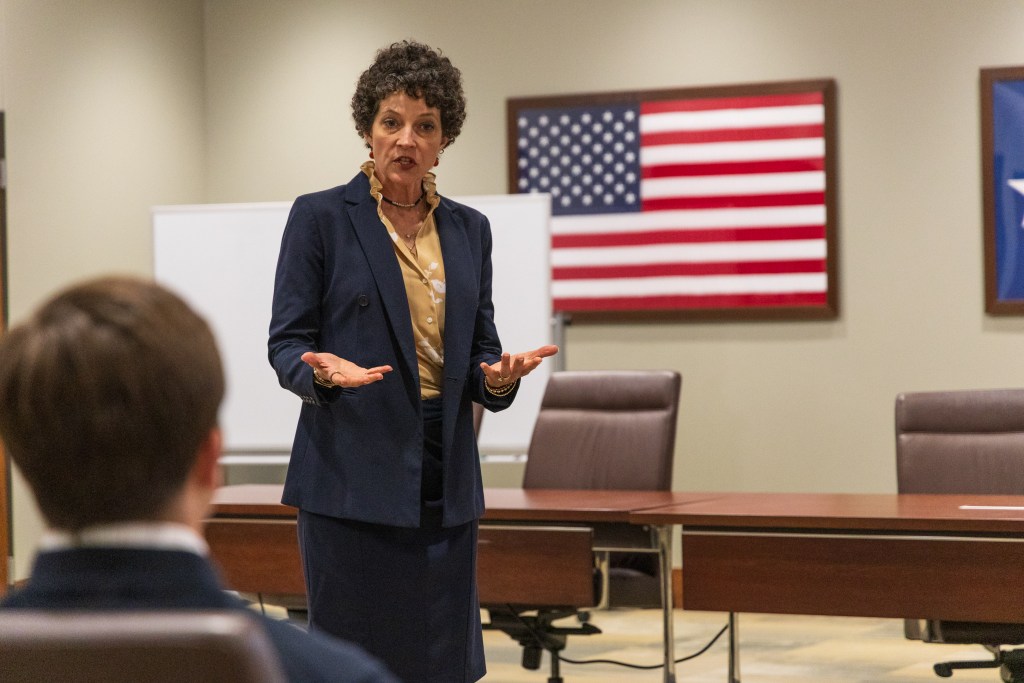
When thinking about effective leadership, Mayor Ginger Nelson was an outstanding example to strive toward. Her outlook on criticism was applicable, especially in relation to my Insights profile. Regarding blind spots, my profile states I am a perfectionist and hypersensitive to criticism. After recognizing this behavior last spring, I have actively worked toward controlling it. Specifically, her strategy of analyzing criticism for truth, motive, and usefulness was most meaningful to my personal application. I also appreciated her comments about stoicism since it is a very admirable and noticeable quality to possess. Nelson’s command of the room was powerful, yet she maintained thoughtfulness and class. She emits the presence of a natural leader, and her success as mayor does not surprise me in the slightest.
On local leadership levels, the dynamic of economic development corporations was a standout area. These groups seem to function as a valuable resource for communities hoping to expand and grow economically. However, it would be difficult to make decisions that essentially impact the entire county. Hollie Shankle described this as a balance between increasing jobs and supporting existing businesses. While one new venture may increase job access, it can also yield negative consequences for adjacent industries. This must all be accounted for when recommending areas of economic development.
Overall, I am very fortunate to have gained on-site experience in the Texas Panhandle. Since I have recently been writing about the hands-on learning experiences in the beef supply chain at Tech, it is a full-circle moment to experience it myself during the final industry trip. Not only has my agricultural understanding made strides over the past three semesters, but my ability to connect topics across different sectors has also been strengthened.



No Comments